An Unexpected Egypt.

The sands of Arabia flowed below the wings of the aircraft depicting all the romance and expanse that they are assigned.

Rugged, rock outcroppings rising from the silk of flowing sand dunes. Little settlements with the desert crouching all around, ready to reclaim the intrusion with one deep breath.

The enchantment started there, out of the airplane window, effectively blocking out the infernal noise of some hundred teenagers from the Dubai American Academy unfortunately travelling on the same flight.

It continued with my first sight of the pyramids. These immense structures, sentinels of such a long ago civilization, that fascinates till today. A civilization of such knowledge, art, skill and learning. If one were to only look at the Sphinx alone, it would tell the story of what intricacy, art, exactitude and ability lived in those ancient people. Even with the ages of weathering, that face and it’s features are compelling and powerful. It is a place to sit and breathe in the whole. The aura and energy of the stones needs to be felt and absorbed. Come back to take photographs another time. This time just sit and stare and feel.

Block out the touts and the buses, see the camels, horses and pony carts and transport yourself to another time and the beauty of these monuments in their prime, of white robed men and women – with gold ornaments, etched in blue enamel. Regal processions and long floats on the green waters of the Nile.

I haven’t even got to that stupendous river. Like a ribbon of green through the golden desert. That says it, who is to describe what that aerial sight was? Only the imagination. I still have not experienced the reality of it, just crossed a bridge and noted that it is not a river hemmed in by buildings, houses and filth. Atleast, what I have seen of it so far.

This is my first day and other than the obvious tourist destruction so evident all over the east, it has been one of enchantment.

We rested and ate at the quaintest little garden restaurant/resort along side a dirty canal in the Giza area. It is the most tackily charming little spot – and I can recommend it as a great lunch, tea, dinner, cool off, rest spot – Alzeb.

Now my day is ending at the Cataract Hotel, one semi luxury – large resort, that has clean rooms and seemingly nice restaurants. Will sample tomorrow.

It gave a good breakfast and has a lovely pool, otherwise I am sure there are infinitely nicer places to stay in Cairo.

We got an extra day in Cairo due to some off road permissions. The pyramids at Sakkara was something that was just knocked off a list of things to see.

The Museum was breathtaking and too large to absorb all at once, so we honed in on the Tutankhamen rooms and were they brilliant. Looking at that beautiful golden face, it is hard to firstly believe you are actually seeing the real thing and not a magazine picture. Then the mind boggles at just the creation of it. What a masterpiece (amongst many others) of workmanship created so many years ago and still so beautifully preserved. It has to be seen, no words can describe the awe and sense of the whole find and the history that was uncovered with the amazing treasures.

The Khan al Khalili market is a cocktail of Chandni Chowk mixed with Janpath and stirred with Sarojini Nagar. The coffee houses in the square are loud and solicitious. The buildings of the mosque and the academy around it are quite beautiful. I am sure the market holds some fascination – to me it was too loud, too pushy, and ridiculously avaricious. Well done without, though I guess one needs to experience it once, to know that you really never need go back again.

This trip was meant to be an off road, driving trip through the western desert, but due to some hitch in permissions we are doing a completely different trip, and the unknown adventure begins.

We are still driving, but now to the Oasis of Siwa, also in the middle of the desert, miles away from anywhere, on the western border of Egypt. It was the place where the Oracle of Amon resided. The oracle that Alexander the Great came to consult. There begins the romance of it all again.

Today has been a spectacular drive, down the Nile bypassing Alexandria and swinging left along the coast towards El Alamein. What a sight it is to see the Desert meet the azure blue Mediterranean!!
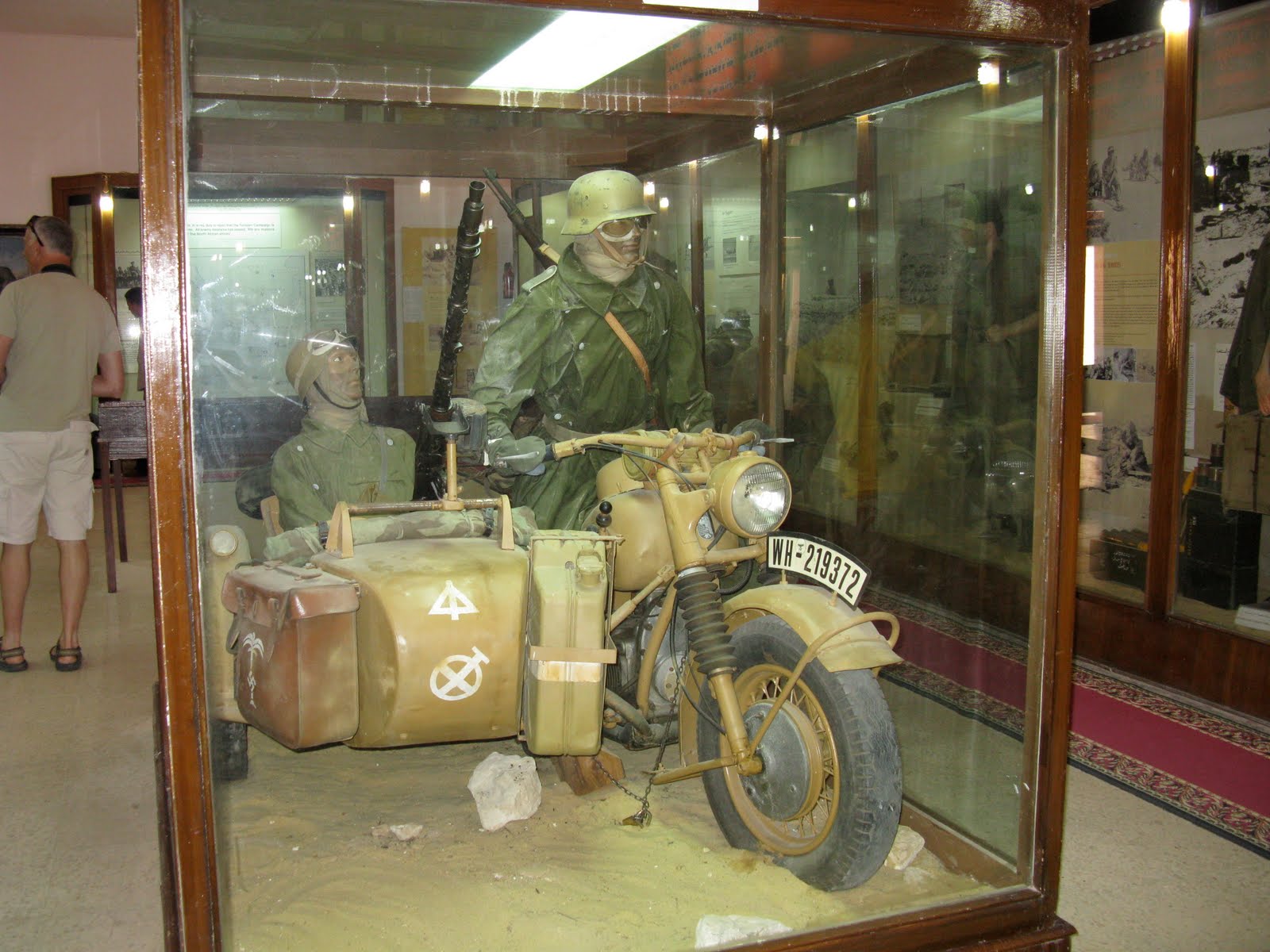
El Alamein brought back every commando comic ever read, and a lot of history learnt. The World War II Museum is rather well done and you get a chance to see what that desert war must really have been.Wrecked spitfires and blown up troop carriers reminiscent of what an ordeal it really was –instead of the romanticized concept in ones head. Miles of sandy beach and this ridiculously blue Mediterranean was so enticing, we had to stop and have a swim.

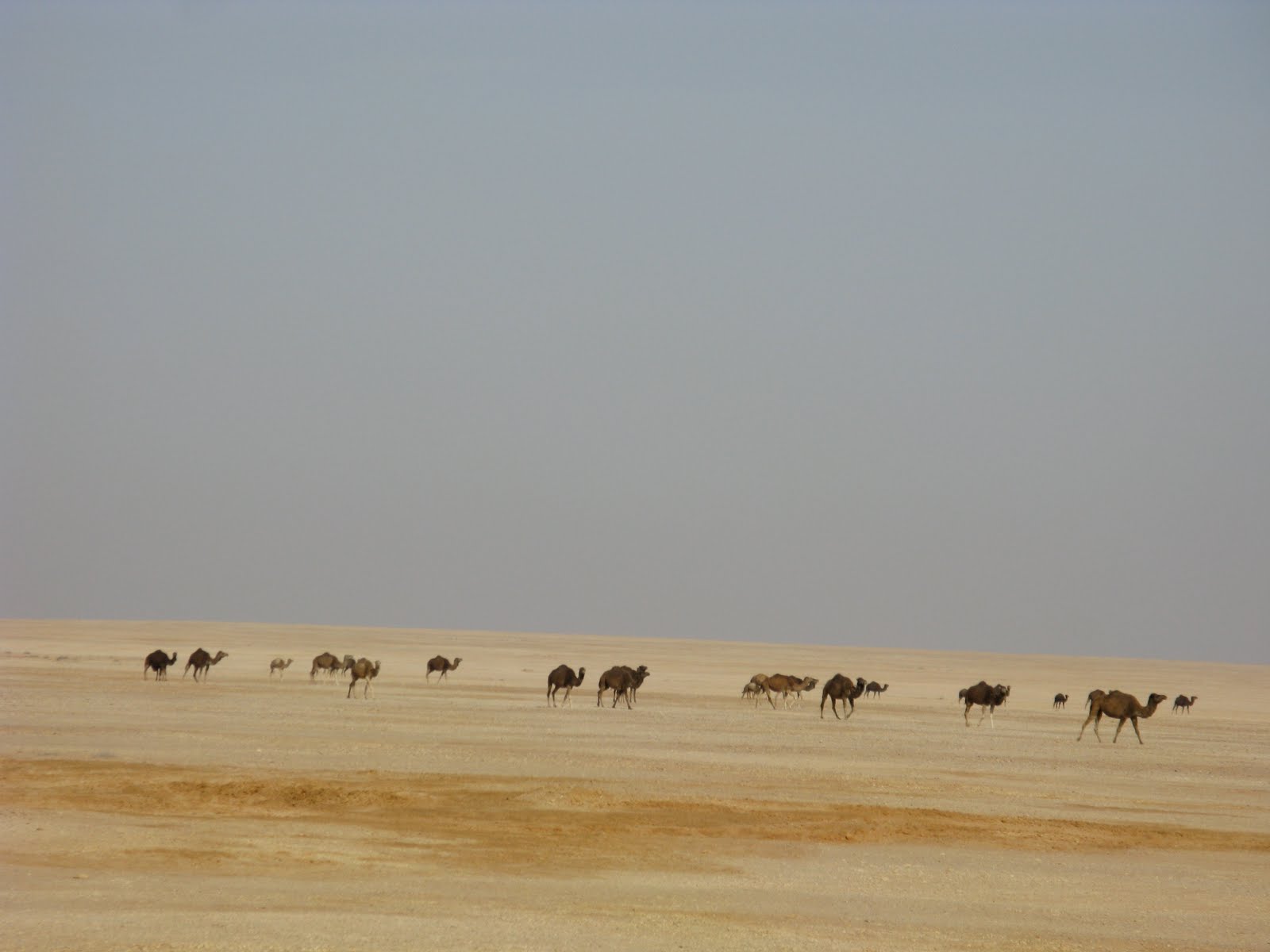
Finally reached the Oasis of Siwa well after dark, driving some 800 kms through completely trackless desert. Wild camel herds were all we saw.
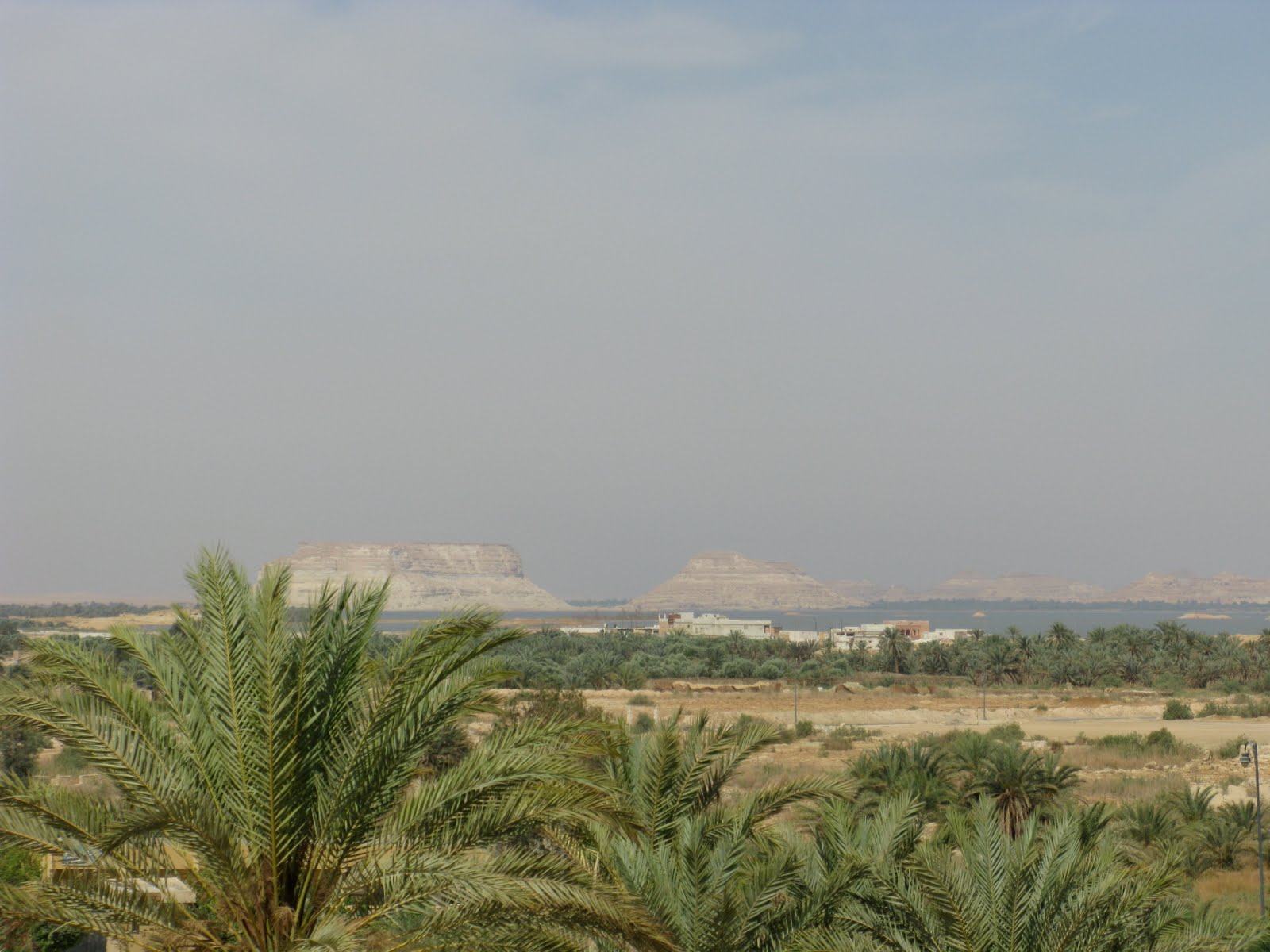

Imagine yourself riding for miles through the desert on a thirsty camel, (obviously you are fried and thirsty yourself.) Come over a rise in the ground and look out across this great depression in the desert, filled with a sea of palm trees and a sea of water. Because that is exactly what it is. A fault in the earth’s crust an area well below sea level, creating a salt water lake and a fresh water one.

It is like a dream, a mirage, waving palms and rippling water surrounded by craggy rock outcrops towards the west and north, dunes of golden sand on the south and east.                                       

Adobe (mud brick houses), there is absolutely no rainfall, so there are actually mud brick buildings. I know my grandmother told me that they had a three story mud built house in their village in Pakistan and I would always imagine it crumbling. Here there are the ruins of a five story fortress which has obviously stood for centuries.
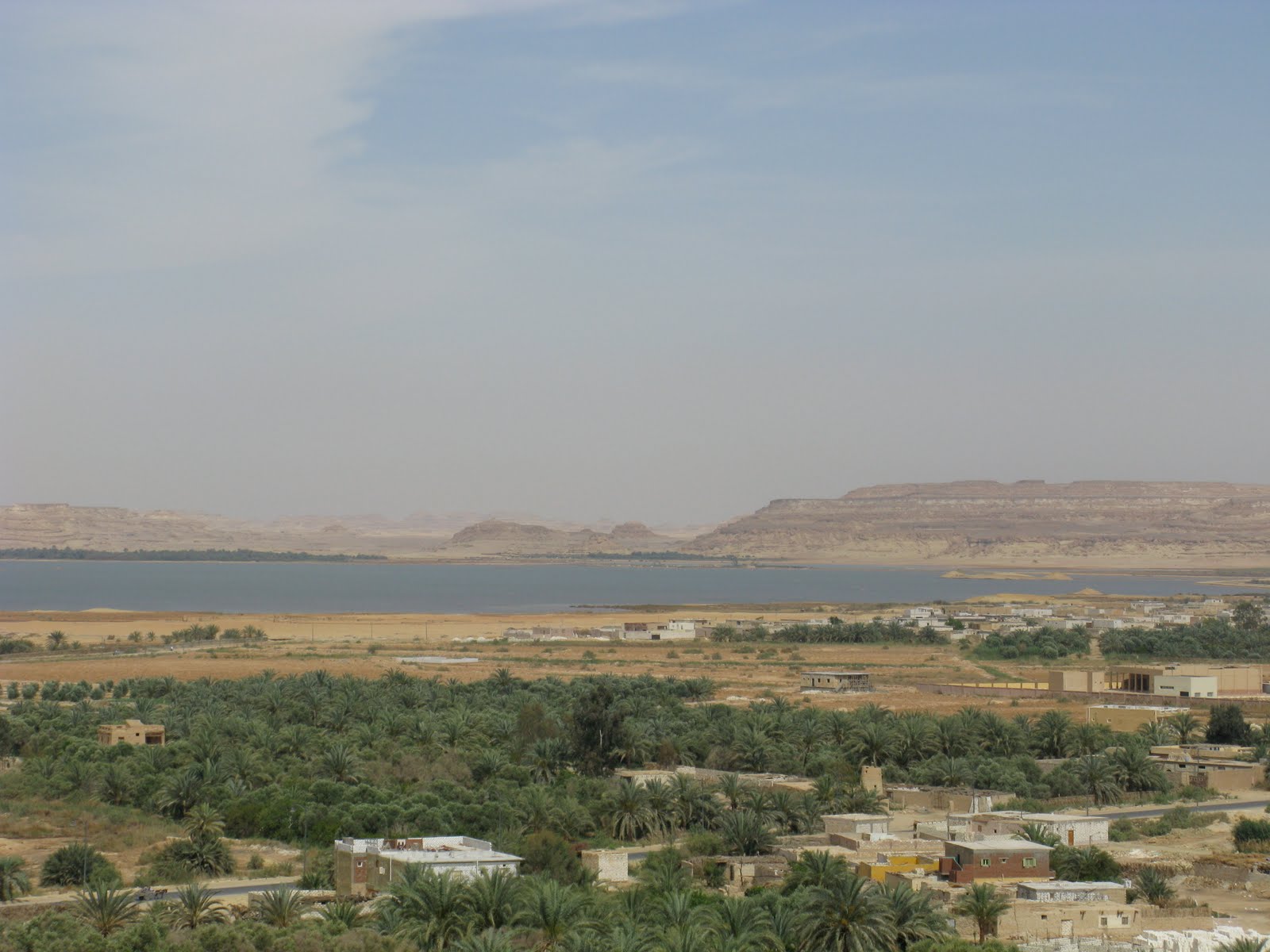
It is wonderful how all the new hotels have kept to the traditional building method, so the aura and ethos of the oasis is totally maintained. The three large hills that protrude out of the centre of this area are catacombed with old burial chambers of pharoanic beings of the 26th Dynasty who created the necropolis. Lit up at night they look supernaturally eerie from a distance. Quite fascinating on actually exploring, there are some remarkably well preserved frescoes.

The ruins of the temple of Amon with some inscriptions dating from the 4th century BC, lie within the ruins of Aghurmi. The old fortress. This is the Oracle that Alexander the great came to consult before his campaign of conquest in Persia. He reached the oasis, supposedly by following birds across the desert. The oracle, Alexander’s court historians alleged, confirmed him as both a divine personage and the legitimate Pharoah of Egypt.

It was a powerful space, whether by virtue of my interest or not, I can not say. A small room, with a few inscriptions on the wall (all that is left), open to the sky, but I think it was the history in those stones and just the fact that he came here and an oracle spoke!!!

We have the advantage of a superb guide, a professor of Egyptology from Israel who does insist on speaking Hebrew but deigns to translate every so often. I am accompanied on this trip by a group of very interesting people from Israel, thus the Hebrew speaking professor.

Once we had climbed around the catacombs and seen the amazing views across the oasis from the top of the hills, we drove through the waving palms on a little dirt road  which bought us to Cleopatras pool.
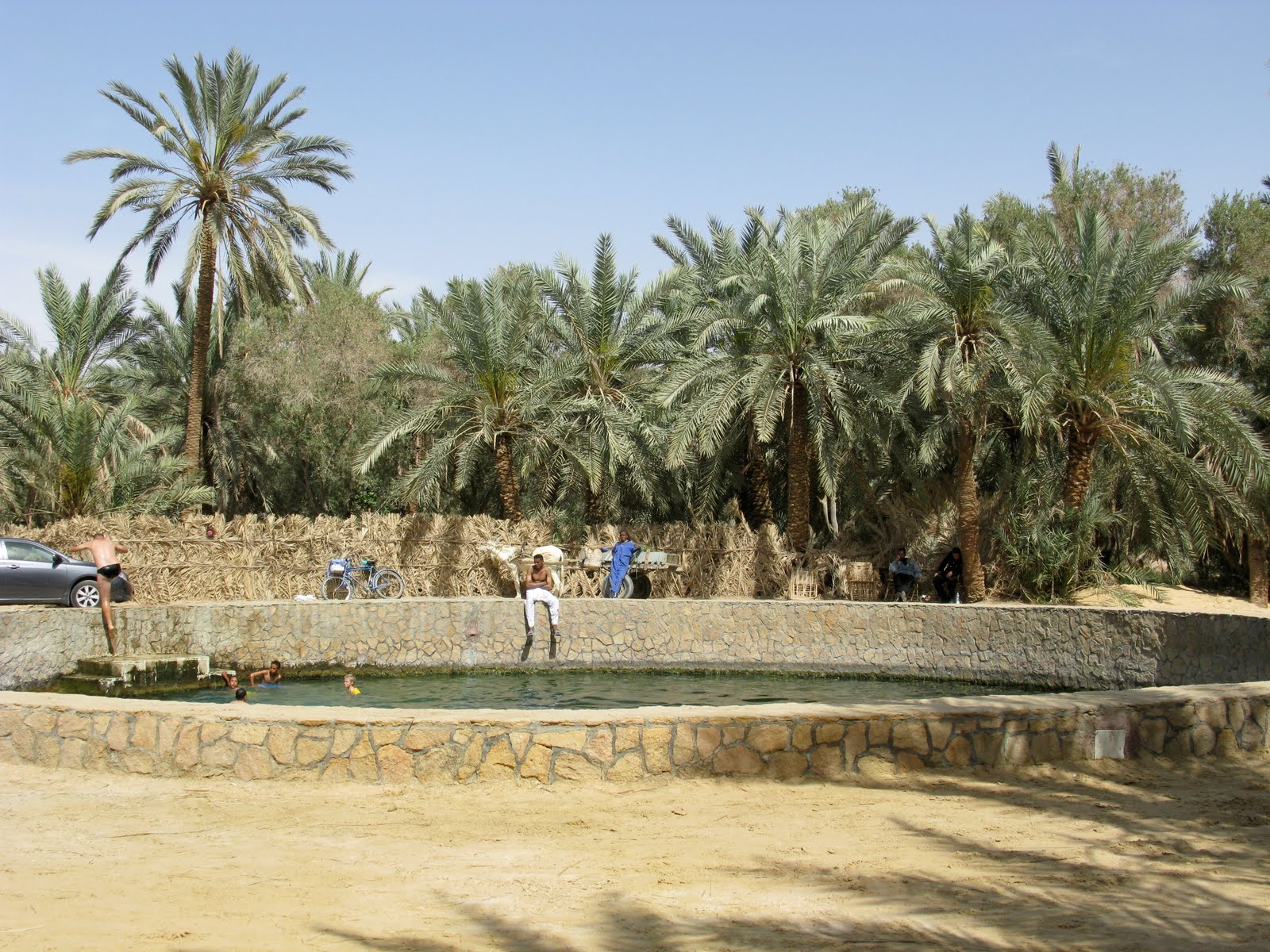
 Situated at a crossroad amidst the palms. An ancient fresh  water spring fills the pool that seems to serve as the  swimming hole for all the people that pass by. There is a  very pleasant little chai dhaba where we sat and watched the  business of the oasis wander past. A little boy riding a tiny  donkey cart laden with grass, stops his cart in the shade,  takes off his djellaba and dives into the pool in his pajamas.  Cools off, puts his djellaba back on and goes on his way.  They all seem to do that as did some of our group.

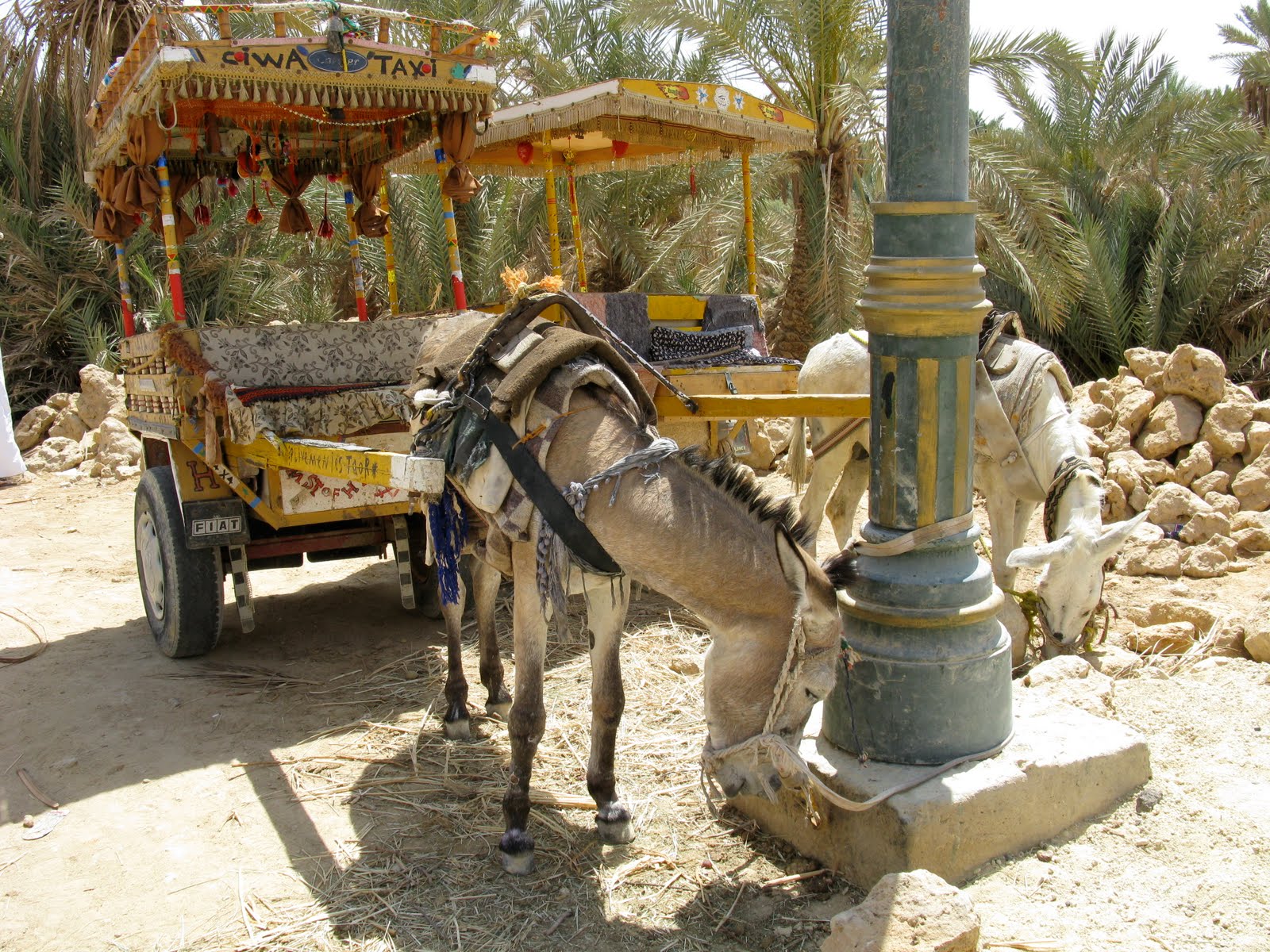
The people of this oasis are closer to the Berber tribes of Libya and they all wear the white djeballa and the houndstooth checked keffiyes which you don’t really see elsewhere. Donkey carts are the preferred modes of transport and even constitute the Siwa Taxi service, all festooned and decorated.
In the evening we hired bicycles from the market, wonderfully rickety, but serviceable and rode out along a little track into the lake to Fatnas Island, which became a palm-fringed peninsula located on the edge of a saltwater lake.

The lake is akin to the Dead Sea. We could actually float sitting up in the water, sipping a beer and watching the sunset and the moon brighten simultaneously across this vaste expanse of water in the middle of the desert. It was surreal, the most amazing experience. There was a fresh water tank to dive into once you got out of the oasis to wash off the encrusted salt – all crystallized on your body. Then we cycled back to the market in the bright moonlight.

Our hotel is the Siwa Garden resort with truly lovely gardens surrounding a fresh mineral spring swimming pool. The architecture is the same mud huts that I mentioned earlier and it is a beautiful spot, very well run.

On the drive back to Cairo, a stop at Alexandria is well worth it, the new library is remarkable and may well go down in history as a worthy descendant of it’s famous predecessor.

I went to Egypt to do something quite different and came away totally enchanted with what I did do.

The Nile and all the regular Egyptian destinations will happen some day, out of the way Siwa was like a gift that fell into my lap. A little place of wonder far out in the nowhere land of sand.
SPITI: of magic mountains.

Rudyard Kiplings’ description of Spiti in his book ‘Kim’ is as magical as the place itself,

“ At last they entered a world within a world. A valley of leagues where the high hills were fashioned of the mere rubble and refuse from the knees of the mountains. Surely the Gods live here.”

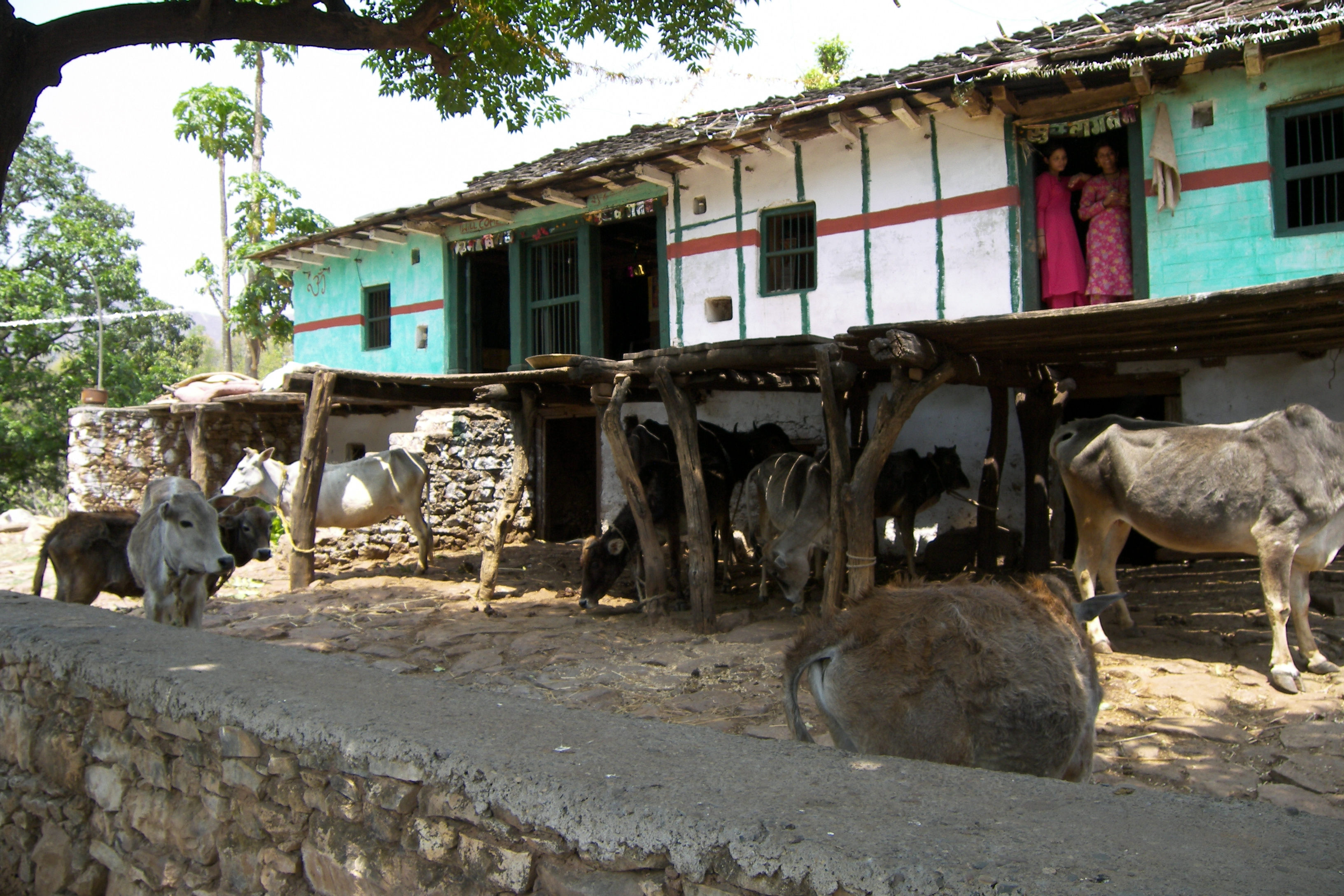
Isolated in it’s remote fastness of trans Himalayan mountains, the Spiti valley is a forgotten wonderland of cold mountain desert. Sheer cliffs weathered by  wind and erosion into the most fantastic pinnacles and battlements,  abut on the silvery snake of the Spiti river which meanders in the upper reaches across a wide valley and constricts to a torrent lower down. Amazingly preserved Buddhist monastries are precariously perched on pillars of rock and sand, or nestled into sheer cliffs. They have been completely untouched by the outside world till just a few years ago and still preserve some of the oldest artifacts and forms of Buddhism.  Amongst all this vastness of space and mud mountains suddenly the mind is bewitched with  an oasis of green around a tiny village. The people, not being used to outsiders are rather shy, but warmly hospitable. They live an incredibly harsh life. They have one growing season and that crop of ‘Satu’, peas, potatoes has to last them the whole year. The mainstay of their lives are the yaks – these multipurpose animals are the beasts of burden, transport, meat supply, milk providers and their skins are used for clothing and blankets. They are extremely ornery animals and riding them is an adventure all it’s own. For one,  sitting astride a yak is a little like doing a gymnastic split. They don’t take kindly to manouvering either, their minds are quite firm on what direction they will take and you just ride along willy nilly hanging on for dear life.

The first time I visited Spiti, we trekked across the Pin – Parvati pass from the Kullu valley. I do not suggest that this is the best way to get there, however it is the grandest of all treks and descending into the Pin valley is an experience, awesomely sublime!

*The year was 1991 and the end of June when my intrepid aunt Prem, her daughter – my cousin Pia and I decided we were going to attempt the Pin-Parvati trek.

End June is still rather early for high altitude treks as was brought home to us by the many well wishers in Manali who tried to dissuade us.

‘It’s a very high pass, there will be a lot of snow.’

‘You could loose your way, it’s a three way pass.’

‘Chances of avalanches and cravasses is highest now.’

None of this deterred us, what almost turned us back was the tedium of dealing with the ‘babbudom’  involved in getting permits to go into Spiti.

Those days even Indians needed to get a special permit, Spiti forms a part of our border with Tibet/China.

It took us two days of persuasion and dissuasion, ‘All women alone!?’

We finally got the permits. Also a local guide, who knew how to get to the pass, but not beyond.

Gear was sorted, supplies packed and we finally set off.

The first leg of the trip is up the Parvati river valley. She is a young, beautiful, powerful river descending through a steep sided, deep valley. The motor road only went a little way up the valley to the little town of Manikaran.

(Now it goes all the way to Pulga.)

The track left the river and wound up through thick oak and rhododendron forest, a long day’s hike brought us to Pulga, the last village in the valley.

Those moments after you set up camp, sit with a hot cup of tea and just soak in the amazing vistas are indescribable. The terraced village fields, bursts of fiery red rhodendron flowers amidst the green depth of the forest. Shimmering waterfalls from the melting heights and those soaring mountains all around. I have only ever found one word for it – magic!!

The next few days we climbed higher, camping one night in a meadow by a hot spring. Lying in that pool of boiling water, surrounded by the singing of the wind in the cedars and watching the colours of the sunset on the snows and the clouds.

This would be my description of ultimate, sublime luxury.

2)

There is a definite energy in that valley.  Parvati is the Mother Goddess, the daughter of the Himalayas and the source of power. She watched over us.

The monsoon was building up and we were worried that it would catch us before we got to the pass and climbed into the rain shadow. But those thunderheads stayed behind us all the way, shadowing the valley behind while we continued in sun shine and fair weather.

(I’ve walked in the UK and have a great respect for those intrepid people who hike up and down those moors and the highlands of Scotland not knowing when a sunny day will turn into a week long downpour.)

For myself, I intensely dislike looking down at my feet while water drips off my hat and the vistas are left to one’s imagination. Wet tents and sleeping bags are not to be borne!!!

Two uncanny incidents occurred during our walk up to the source of the Parvati, the Mantalai lake.

Three days into our trek, we had left all sign of human habitation and were above the tree line. We camped in a meadow that was like a Japanese garden. Artistically placed rocks, stunted juniper bushes and scatterings off buttercups and blue Himalayan poppies. Through it all burbled an enchanting little stream.

Into our little camp came a saffron clad ‘pundit’ and his boy ‘chela’.

Now for all the sunshine, once the sun went down, the temperatures dropped drastically. We were above 4000 m, there was a wind chill factor. We were huddled in down jackets around our little camp stove. (No wood here to make a fire.) Then in walked these two barely clad people carrying nothing more than a cloth bundle.

Obviously we asked them to share our meal.

In conversation we learnt that they too were heading to the Mantalai lake. They were traveling from South India to perform a special ceremony at the lake.  It was then we discovered that the lake was one of the centres of great Tantric energy .

The mysticism of Tantra is so little understood. All that a lay person knows about is the amazing power and obviously, as all power, it may be wielded for both good and the opposite.

Most stories recounted are scary, of black magic and sacrifice. Thankfully we never have had the likes of the Inquisition, else more than half our priests would have been burnt at the stake!

However, this strange meeting was spooky. The ‘pundit’ looked and spoke like a kind learned man. But uncanny was the response we got when we asked how he was planning to travel the rest of the distance with no food or supplies. So far it was imaginable, there had been villages and people who would have sheltered and fed them.

‘What would you have done tonight if you hadn’t met us?’ we asked.

He looked quizzical, ‘But you are here.’ Was all he said.

4.

We climbed further up the valley, the river was narrow and a broiling, leaping froth over huge boulders and then the valley opened up into the debris of glacial moraine, rubble, scree, boulders, still interspersed with amazing flowers and little meadows of tough, scrubby grass.

The next two days, the priest and his companion appeared every evening when we set camp. We shared our food, they would stay and talk for a while and move away to sleep.

About their lack of cover or bedding. He said all senses were controlled by the mind.

‘There is no cold, heat or discomfort unless you feel it.’

It was an amazing person that we had the good fortune to encounter, that we were too spooked to actually enter into that experience fully is a pity.

We were spooked. As I mentioned, the hearsay about Tantrics is scary.

‘Would we be possessed, sacrificed, turned to stone?’ Actual thoughts.

So our conversations with him stayed to surface things. Not even asking what kind of ceremony or prayer he was going to perform at the lake. I don’t think he would have told us, but honestly, we were too scared to venture there.

He figured our guide had only ever been to the lake and not over the pass and he said a strange thing. ‘Your other guide will meet you there.’

I say ‘said’ because that’s what we realized later. At the time we thought it was a question.

It’s true that our guide had never been across the pass, but an old uncle of his had, and with that basic knowledge, our map and compass we were going for it.

The last night that the pundit was with us, we were camped about two days short of the lake at a spot called Pandu Pul. (The bridge of the Pandavas.)

There is a large boulder in the centre of the river here and a series of  smaller ones leading to and from it creating a bridge. So essentially you use the smaller boulders as kind of stepping stones, then do a little bouldering on the mammoth in the middle and hop,skip and jump across to the other side. A little slip would mean being churned into some frothing raging white water.

(The bridge was said to have been built by the Pandavas during their exile, so their wife could cross the river. This is part of the story of the Mahabharath and If anyone wants a little more about that, wikipedia is a good place to go.)

We thought we’d tackle it better in the morning after a rest.  It had been a short walking day. We were camped in a pretty little meadow by a Gaddis (shepherds) rock shelter.

The Gaddis are nomadic herdsmen that bring their flocks up to these pastures in the summer. It was early for them yet, but their shelter did just that, sheltered us from the incessant wind that blows in these areas from mid day to dusk.

While we were setting up camp, we heard a hail and saw a man in homespun shepherd clothes come bounding down the hill behind us. Rather surprising. There were no flocks and he seemed alone. Also he was a very large man, unusual for the area.

Well he came leaping down the hillside and there was this tall, red bearded, white man, incongruous in the pajamas and woolen coat of a shepherd.

‘Hello,’ he says,’I’m John and am I glad to have caught up with you.’

I can’t even begin to tell you how astounding this was. We just gawped.

5.

So, in that lone spot we were becoming a crowd. Luckily he carried his own food. Our rations were certainly being stretched and we still had at least another ten days of hard travel before we possibly hit a replenishment point.

John was funny and strange. Seems he’d been traveling in the mountains for some years. He came from America every summer and wandered the Himalayas.

What he did back home we never quite found out.

But here he was, a big American in ‘Gaddi’ garb, red beard and ponytail, pyjamas, homespun wool coat and well worn mountain boots. Shy, very proper manners, had barely ever spoken with an Indian woman because he believed it was taboo. Well, in the remote places he’d been wandering he was half way right. Certainly not taboo, but definitely not done, even had the opportunity arisen.

We are a hospitable people, and within that concept of hospitality it is polite to enquire after a person, their family, what they do. It is not just rude curiosity, it is to welcome and absorb.

Unlike the Pundit, John was a curiosity we definitely needed to question.

So where, what, how, why, does this man fall off a mountain in the middle of no where, searching for us?

He heard about us at the permit office in Kullu where he’d been trying to get a permit for Spiti. Hadn’t got it, but thought he could accompany us to the pass at least.

Well that explained trying to catch up with us. Nobody would attempt that pass alone.

He just seemed to be the ultimate explorer. Travelled only in the mountains, kept a badly lettered journal.

‘Do you go back and publish your stories?’

‘No, I do not want other people to discover these pristine spots that I have seen.’

Ok, so this seemed to be self discovery and knowledge, just for himself.

Well who questions that?

What he did have was an excellent contour map of the area. Something that we did not, because the Survey of India does not issue anything but very rudimentary maps of areas on the Indian border that are called, ‘Inner Line Areas.’

Bit of an anomaly that you could get them elsewhere in the world.

However, here was our guide, or at least his map gave us a chance to find the right route across. We had been quite willing to follow the compass and a general direction. It would have got us down the other side willy nilly, whether into Spiti, the district of Kinnaur or back on this side into the next valley was any body’s guess.

The Pin Parvati is a cross roads pass, currently heavily snowed under, chances of our distinguishing land marks were rather slim.

So, that all seeing pundit already knew this? We had courage enough to ask if John was whom he had meant when he said our other guide.

Another enigmatic response. ‘It is as it is.’

6.

The distance from Pandu Pul to the Mantalai lake is a days hard walking. No regular path or trail, it’s just a lot of boulder hopping finding the easiest route over the glacial moraine. Hard on the legs and blistering to the feet, so when we found a tiny meadow beside a mammoth rock about mid afternoon, we decided not to beat any records and give ourselves another day to get there.

There was a large cave under the monolithic rock. Obviously used as a shepherd shelter. It provided a much needed break from the ever present keening wind.

The river was broken into silver ribbons spread across the morraine, the high peaks of the range were up ahead glittering white.

The pundit had gone on so we didn’t have his company. It was a lazy sun baking afternoon sheltered behind the ‘cave rock’. We had rather necessary, freezing water, baths. Chalked out the route on that wonderful map. Re distributed the weight in our packs and generally got geared for what was going to be rather a challenge.

Our attempt to cross the Great Himalayan Range over the 5320 m high Pin Parvati Pass.

Unlike other passes in this range of mountains, which are traditional shepherd routes, the Pin Parvati is not used by shepherds. The meadows around the lake are as far as they bring their flocks.

This pass was discovered or rather first documented by Sir Louis Dane in 1884 as a possible entry from the Kullu to Spiti valleys. However it has never been a regular route for any travellers. Offering neither an easy approach or a quick crossing.

One of the reasons for the Spiti valley having remained so isolated and untouched has been it’s inaccessibility.

Ringed by high mountains to the north, east and west, the passes that do allow access are all over 5000 mt. To the south where the Spiti river flows and joins the Sutlej is the stupendous, perpendicular walled Sutlej Gorge.

We got to the lake in a hop skip and jump the next morning. It lies like a little jewel in the hollow of towering mountains. The priest was already at prayer on a little peninsula of land that pushed into the lake.

We kept the width of the lake between us and set camp on the near side, to not disturb as much as to get as far away as possible from any effects.

The snows had only cleared off little patches of spongy, damp meadow  immediately around the lake.

That small patch of water in the midst of the mountains turned every colour of the rainbow and then some more through the day. From a mirror reflecting an upside down world in the morning through, aqua, turqoise, teal and emerald into blushing pink, lilac, mauve, indigo blending into ash and sparkling silver in the moonlight.

It is not easy to describe that place or the sensations it evoked. There was a timelessness, a hush, a serenity. A sense of eternity, immensity and evanescence, all encompassed in the one.  The expanse of the soul and the mote that is you.

The great mountains, draped white in the hollows, with jagged pinnacles piercing a blinding blue sky.

The stillness of the pundit in his saffron robes across the smooth calm waters of the lake.

The burble of the tiny stream leading out of the lake, the incongruity of this trickle of water turning into the gushing, springing river we had followed up.

The trill of a lark and the call of the lammergeier as it wheeled lazily in that expanse.

Just thinking of it carries me away, I just hope I’ve managed to get it across even half way.

7.

We scouted out our direction for the start of the climb but stayed at the lake that night. Prayed for a clear cold night so we’d have a firm walking surface the next morning.

(This is a story in continuation….. that I will get back to)

A river rises and….

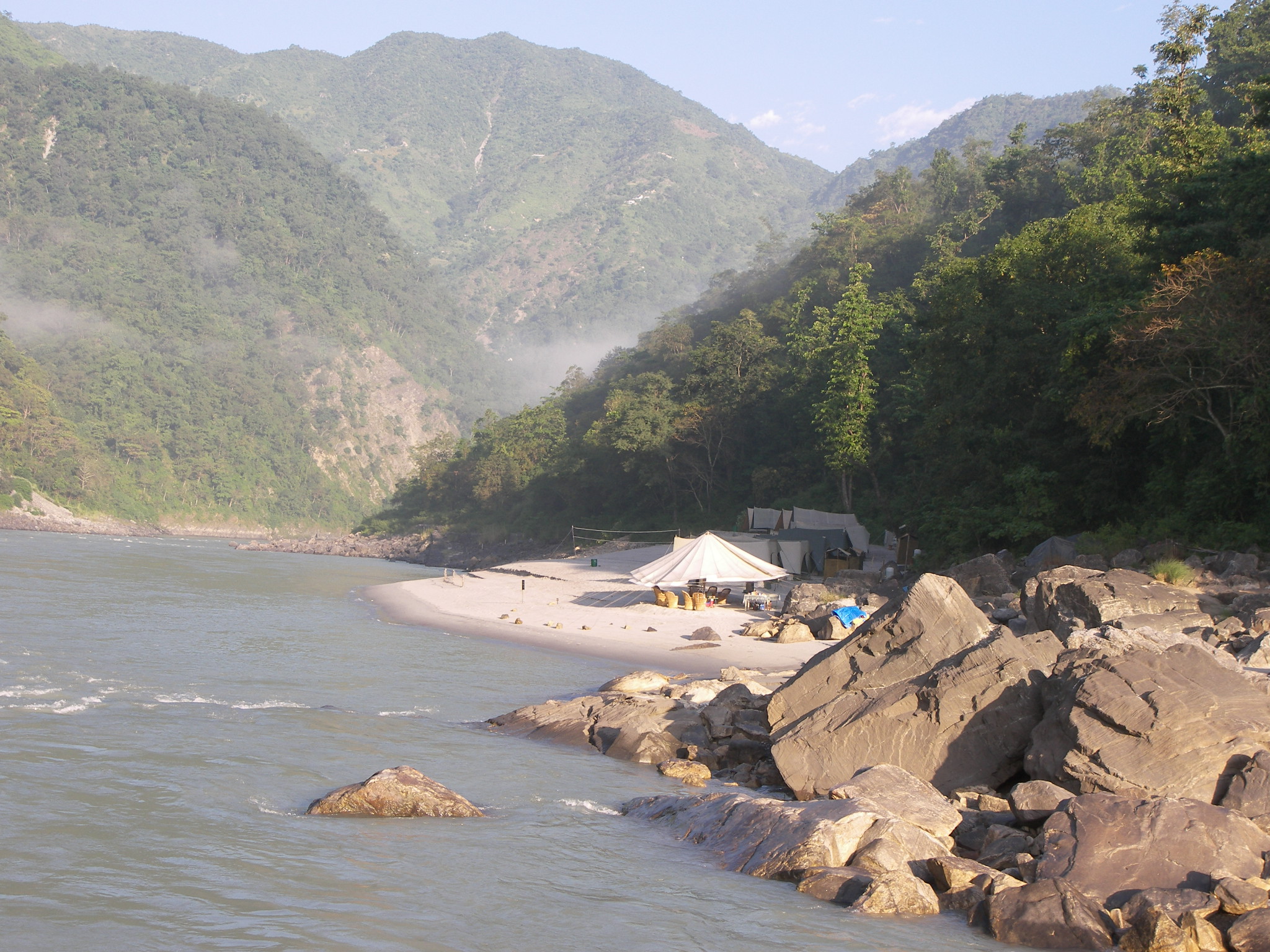
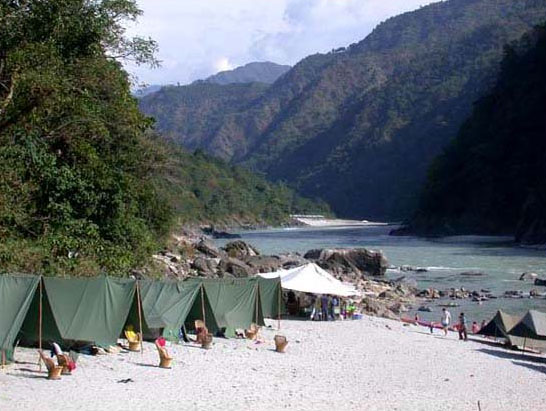
My home is a tented camp. I run very satisfying trips for myself and the people who come share it with me.They come holiday, have a break, raft some amazing white water, hike lovely hill trails, meet a culture and a people for whom time and distance have no measures. Like me they get a glimpse of a different perspective.Some have pure fun, some touch base with the earth and themselves.

Know that feeling when you stand barefoot in the shallows? One wave washes the sand out between your toes, and the stresses with it. The next embeds your feet deeper and that rooted calm seeps up. Most go home replenished and rejuvenated. Some don’t, “there’s creepies in the tent, beasts in the night and sand in everything!” Discoverers all of us, in some way or other .

Is life satisfying?

It wasn’t always so. I grew up loving the outdoors – swimming, sailing, riding, trekking, snorkeling, climbing. Walking through the fields, sitting by a gushing tubewell, fishing for tadpoles in the canal. If I’d been the son, I would have been a gentleman farmer, watching over my acres and seeing my crops grow. Quite content. A different story.

As it is. I married the right (very wonderful) man. I was a happy wife, became a good housewife, became a happy mother, I lived in a big house, ran a beautiful home. Entertained bankers and CEOs. For those around me, I had it all. It just didn’t seem like it to me.

I became a stressed housewife, an irritable mother; the ‘wife’ ceased to exist, the person ceased to exist. It was
a shambles. The way it was meant to be – wasn’t. How was it meant to be? It fell apart.

The only tenuously right thing, for me, I seemed to be doing was helping friends run an adventure tour outfit.
I opening a similiar one of my own, in partnership with a colleague. It limped along for me as I limped along, still trying to be the perfect homemaker & mother, fulfilling a preconceived notion of how it was meant to be. The task loomed like an unclimbable mountain.

Coming upto the river and camp, running a trip – was like coming home. I was happy, fulfilled, I felt successful. But the guilt loomed – like I was running away, should get home and face the responsibilities. That magical river seemed to be watching it all. Probably decided a sharply taught lesson in building and rebuilding, choices and decisions, and the inevitability of flow, was in order………

For those of us who live on the banks of the Ganga, she’s a friend, soulmate, provider and playmate. I lie on her waves and feel the most comforting sense of solace and peace. She not only washes away sins, but also fear, pain and sorrow. The same waves toss you playfully in a kayak and tumble a 20 foot raft like a handkerchief in a washing machine. She had always been benevolent and providing.

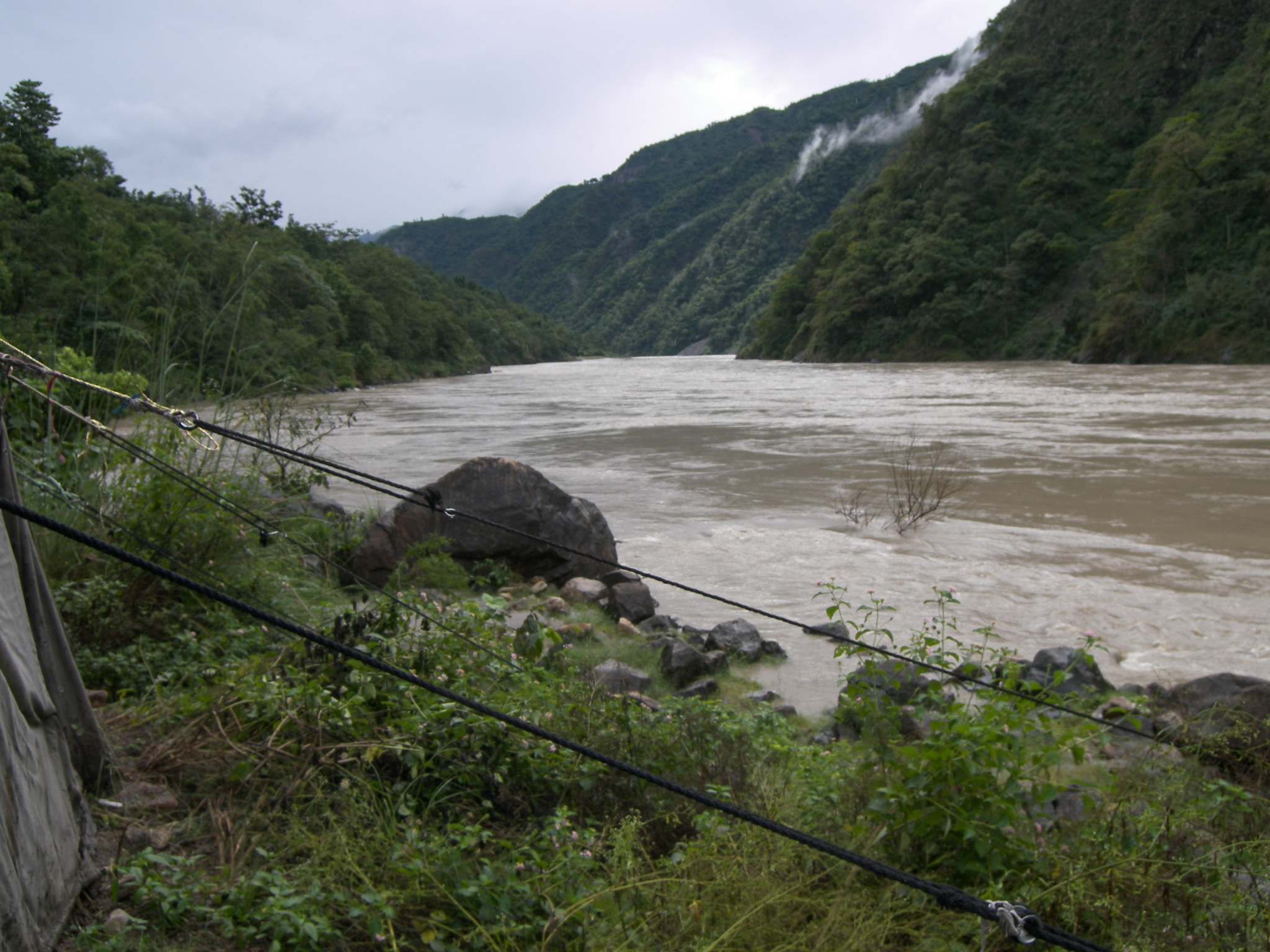
We woke one morning, after three days of incessant, unseasonable rain, to a swollen, brown river.
She’d risen some seven to eight feet through the night and was lapping just outside my tent. It was still raining and she was still rising visibly.

The people already in camp were evacuated. The group meant to arrive was stalled.

The staff and I started taking down tents closest to the water as fast as we could. Setting marker rocks to ascertain the rising water; praying and believing it would stop soon. We’d never seen anything like it.
She didn’t stop. All the tents came down, wet and heavy they were dragged and dumped from high ground to higher ground to still higher ground. The kitchen tent being located above what we considered the high water
mark, was left for last. The whole day had gone in manhandling gear into the forest above the beach. With dark setting in and no beach left, we clambered through the forest to the kitchen tent. Water lapped just outside, still rising. A raging torrent flowed past with piles of debris whirling along in it’s angry spread.

It was time to abandon it all. Pulling gear out of the kitchen with water lapping at our ankles we finally abandoned the kitchen tent to the river – it was too late to save it.

There was nothing more to do, it was dark, we were tired, wet and cold. We sat under dripping trees amidst our piles of semi salvaged equipment- beds, trunks, life jackets, potatoes and bread scattered through the forest
and along the path leading to the road. Every so often we moved higher and watched as she grabbed a tent, a pole, a crate of drinks that we were too tired to move.

She rose all night. We abandoned our camp to the monkeys and any life that chose to make use of it for that long rainy night and went to Rishikesh town. Wet and chilled with all our worldly possessions lying on the forest floor in the path of a wildly raging river.

The next morning dawned bright and clear. The monkeys had eaten all the bananas. The kitchen tent was wrapped around a boulder. The dining tents were buried under a fresh layer of flat white sand where earlier there’d
been rocks.

In two days the beach had appeared again. She’d lifted and flattened, added some sand here and taken some elsewhere. In a weeks time she was back to her sparkling green, lilting self and the only evidence of the
complete devastation was to be seen in the floor matting of the tents hanging in tatters from the tops of the trees above us.

Camp was dried out , up and running: it was hard work but it didn’t feel like it. It got done happily: the sun shone, the birds sang, tents got dried out and mended, kitchen got set up under the trees. It all got put together perfectly.

As I went about doing all this, the thought kept going around in my head – why is this so easy? From complete wipe out to rebuild with humour and cheer. No panic, no despair. The lesson needed to be applied to the rest of my life: choices that make you happy, not feeling guilty about chasing happiness; its not frivolous, it’s essential. Duty, jobs needing doing, responsibility all flow comfortably along.

A large home, a high flying job? Success needs to be an individual measure.

I am successful: I wake up and hug myself in glee, I do the same at night. My home is a tent on the river – if need be it will get bricked, mortared, thatched or tiled. My shopping and provision run is a twenty minute walk and a round drive of fifty two kilometres. I walk up to my jeep through the forest, new plants and flowers, myriad birds. I drive along a lovely hill road with beautiful views of the river and mountains. My suppliers in Rishikesh are friends, small town life has time. We catch up on news as my lists are checked and packed.

The power of dreams and the power of nature !
This is what I want to share with a host of us out there, whose dreams, much like mine, must be getting buried under a myriad humdrums and never become important enough! Please keep them and nurture them, it’s what
ultimately gives you that huggy, champagne feeling. The world becomes a great place to be.

ROMANCING THE ELEMENTS

An article that I wrote for a travel magazine in 1986 after my first ever rafting trip, ammended later for another magazine some years later when I was part of the fledgling industry, it still pretty well describes what we did for many years.

WHITE WATER ON THE GANGA

White Water – the words themselves have a special cadence, fascination, power. The hydrologic cycle is all around us: water evaporates, clouds, falls, freezes, melts and flows, creating powerful shaping forces – Glaciers, Rivers and Seas. All that water also has  many personalities and it is alive – sparkling, calm, playfully boisterous in a tumbling stream or  forbiddingly awesome as it thunders on a gale-torn shore or through a high mountain gorge.

One of the great moments in history must have been when man discovered he could move in and on water, either swimming or riding a log. There must have been many who negotiated a river or ran a rapid for exploration or sheer joy. Jack London, the American writer whose entire life was an adventure, describes an incident during the Gold Rush of 1896.The area was that of the Klondike River in the Yukon Territory of north-west Canada. Creating a hazard on the miners’ trail north was a great juggernaut of white water created by a spring flood. Loading their equipment on logs lashed together, attempts to negotiate this monster were being made by only the intrepid, with no success. London spent a day watching their efforts and studying the flow of water. He then built his own raft, and with mathematical precision, gauged the way the water was flushing, his point of line up and maneuvered himself through the rapids in an upright raft with no mishap. He spent the rest of the spring, while the flood lasted, running the miners and their equipment through the rapids. What was his motivation? A driving need, a test of skill, a belief in himself, a desire to help, a challenge or his own gold rush?

Today only the equipment differs. The game is still the same: one of skill, excitement, fascination and discovery. A test of personal mettle and skill for the river runner. Pure fun and enjoyment, a wonderful ride for the uninitiated. But for nearly all who experience it, there’s something more, something ineffable yet deeply satisfying.

Though today I form one of that group of river people who live and work on the Ganga.

My first introduction to white water took place on a weekend charged with many wonders. The memory is still clear as a picture, but in trying to recount it, images start overlapping. The most idyllic surroundings. A wide expanse of silver sand lapped by the jewel-green Ganga. Forested Hills. Silence and bird-song backed by the muted roar of  the frothing rapid in front of Camp. Our river guides gauged rising & dropping river levels by the sound of the roar.

We drove north out of Delhi and through Uttar Pradesh on a smoky dawn. Some hate the drive, but it’s an incredible experience. Green fields and villages, cow patties along the roadside. Trucks and bullock carts loaded to the gills with sugarcane. Overturned trucks and traffic jams, of course. Nerve-wracking, but never uninteresting. Hardwar and the ghats were passed on our left, on through some lovely forests. By passing Rishikesh, we met the glowing green Ganga. We followed the beautiful river up into the hills- forested and green, broken up where little villages nestle amongst terraced fields. Camp was some 28 kms beyond Rishikesh.  This 40 km section between Kaudiyala & Rishikesh is the rafting capital of the country. There are quite a number of camps, a few of the professional one’s are listed below. Ours was beyond the general crowd around Shivpuri, closer to Byasi. A deserted bend of road, tall green trees to pull up under. Down below through the trees you see blinding white sand. We follow a zigzagging footpath down through the jungle to the beautiful silence and expanse of the beach and  river. It seeped in as we walked towards the large white parachute tent which acted as the ‘mess and common room’. Here we met those incredible men whose lives are spent on their ‘sticks’ (oars, as recounted in their camp song) There were Yousuf, Ajay, Vikram and J.D. – hospitable, unflappable, highly skilled and totally professional. River guides are a different breed, they do what they love, and this lot does it very well. These were the original professional Indian river guides. All are still on the river, but are now called the venerable ones !

We were offered a drink while our luggage was carried down and then shown to our tents which were dotted further along the beach. Then they were little pup tents, now they are very comfortable, safari style tents with camp cots and regular bedding, quite luxurious. There were & are very adequate ‘loo’ tents set back near the forest and wonder of wonders, running hot and cold showers, true one hangs off a rock and they are in tents, but that is their charm and romance.  The camps all follow a strict environmental code, and it’s easy to see how it’s maintained – those pristine surroundings demand it!

The river flows calm and deep, an incredibly crystalline green. The farther bank rises sharply out of the water – a steep and thickly forested hill bisected by a darker cut of denser vegetation which marked the path of a spring which emerges in a waterfall half way up the hill.  We were surrounded by the hills. The forest behind us stirred with bird song and monkeys. The effect was soporific and rather unbelievable. Lunch was served, a little crunchy with sand. That setting and that camp was the backdrop against which all the action took place- the rafting and the camping, experiences blending together to make pure magic.

After lunch, we were issued life jackets and helmets & told to grab a paddle each. The rafts were ready and waiting for us. Our life jackets were fastened into flattening corsets, helmets jammed on our heads- the very picture of inelegance. But safety comes first, as explained exhaustively during the briefing given by Ajay in a manner which was meant to be  reassuring, but  as he went about saying, ‘if you fall overboard’ or ‘in the case of a raft flipping’ I don’t think many were reassured – he did say though that, ‘the most frightening part of the trip was the briefing’. To them, it is a way of life: many could not take it quite so casually.

Excitement mounts the moment one reaches the ‘white water’. The first day we ran what is called the Initiation section, the largest stretch of the rapids being ‘Three Blind Mice’ Grade III (gradings are listed at the end). The guides made us perfect our paddling strokes on the flat section, ‘forward’, ‘back’, and ‘hard forward go, go, Go!’ they shout. You really get into the swing of it. ‘Get Down’, he yells, and everybody lands in a heap at the bottom of the raft wielding their paddles like clubs. Of course, that isn’t the way to do it and it is very patiently explained again. Great team spirit, and you’re feeling pretty good, but still hanging on to his every command- ‘all overboard’, and it almost happens, we’re all so spellbound. ‘How deep is the river? pipes a voice. Ajay gets this look of deep concentration, bends and scoops up a handful of water, rolls it meditatively around his mouth like the ultimate wine-taster, then spits it out and says ‘right here I’d say about 8.02 meters, give or take the .02’. For seconds we all gaze at him in awestruck admiration, then the penny drops and the questioner wants to melt away and merge with the surroundings. The right answer, of course, is ‘it’s chest high on a duck!’

There’s no describing that flow of adrenaline, the sheer joy of pounding  through those rapids. It starts something like this – “All paddling forward nice and easy”. The current catches the raft and the sound of the rushing water envelopes you. ‘Hard forward, hard forward – look out for the big hole on our left – lets go, go, go’. Paddling furiously, hitting air and water we careen through. ‘Great work guys – relax, take a break’. You look back at the frothing white, slightly shaken, thrilled to bits, wanting more.

We see a lone kayaker behind us. We now watch a master craftsman practicing his craft. He plays the water like a musician, and the water plays back. It’s uncanny, they’re friends, that river and the kayaker in his kayak. He ‘flips’, he ‘rolls’ he does ‘enders’. The water cushions him, pushes him, laps lovingly and smothers him. He comes along, skimming the waves, weaving in and out. He catches an eddy and spins around- paddles half-way up the rapid. Stops to surf a wave for a bit, like saying hullo to an old friend- allows the wave to catch his bow and stand him on end, like a salute, and then he’s flung straight up in the air and out, then skimming on down. An amazing equation between man, craft and the river.

White water, as we learnt, isn’t just a froth of water created by the drop in a river bed or the narrowing of a valley. It also has definite characteristics- ‘holes’ and ‘hydraulics’ which in turn can keep you or flush you out. ‘Riffles’ (small waves) and ‘haystacks’ (large waves) and ‘eddies’ and ‘boils’. All these features are ‘read’ by the river guide like road signs telling him how to negotiate that stretch of white water.This requirement of literacy by river guides I recognized much later. That day they were only magicians.

Another discovery comes with the ‘Body Surfing Rapid’ Grade II – a long series of big waves just before the end of the days run. ‘Tighten your life jackets, shoe-laces and spectacle bands, and jump overboard’. This time we do. The freezing water makes one gasp, there’s no time to retrieve your breath before the next wave washes over you. ‘Point your feet downstream, breathe in the troughs’, the instructions were so clear. Of course, the troughs are never deep enough for a breath, but once you get the hang of it, it’s joy, a long coasting, splashing ride bobbing like a cork, speeding down a trough, breathing water because you thought you’d crossed that wave and didn’t. Exhilarating and freezing, it was pure fun.

Back at the camp, the sun goes down and the witching hour is upon us.

Silver river, lengthening shadows and a walk towards the far rocks. The river here sings and gurgles. Colourful birds whirl around like dervishes, obviously an evening game they play. Flights of cormorants skim past, dark against the river. Down on the sand a family of Red Wattled Lapwings perform a loud parade, marching around in perfect formation like a troop coming to order for the last reveille. Back towards camp the fire is glowing and the strumming of a guitar sounds faintly. The chill creeps in from the water and that picture of warmth and fun invites one back to dinner and an evening of songs and mad games, moonlight and shadows and pure romance. Sleep seems a waste of time. I want to keep gazing at that star-spangled sky , the river and hills bathed in moonlight.

Morning mists lifting softly, like a gentle unveiling- a few more trees, half a hillside and suddenly the sun spilling over the hill lighting up the tendrils of mist to a golden haze. A walk towards the rocks and closer to the jungle other inhabitants of the area are stirring as well. The Lapwings repeated their parade, in precise order and much noise. There is a shy Sand-piper bobbing nervously by the edge of the water.  Sitting quietly on a rock I watch a very interested Pied Kingfisher watching me with great curiosity. I obviously find favour, because he takes off suddenly, swoops out over the water, and with masterful showmanship, hangs hovering in the air getting set for his dive, which when it comes is perfect. He repeats his act a couple of times and it’s a great performance but for the fact that he never once catches a fish! The jungle is full of birds – the Indian Roller, White-eyes, Fantails. I could possibly have spent the day just wandering around, but the rafting stretch today requires an early start.

We drive some 12 kilometers upstream to Kaudiyala. En route we stop to scout the awesome ‘Wall’ Grade IV+. The guides inspect it through their binoculars and we hear incomprehensible comments like ‘it’s flushing from the right’, ‘the eddy’s forming’, ‘hit it straight and boom right through’. This is the ‘mother’ of all rapids on the Ganga and has a phenomenal build-up. Didn’t look like much to us from the road, but once we got there it put our hearts in our mouths.

We begin the trip by negotiating ‘Daniel’s Dip’ Grade III+. It’s named after Mark Daniels, a Canadian river guide who had been teacher and mentor to our own guides. In spite of his hallowed status he’d managed to hit the wave wrong (it can happen to the best, at times) and went for a swim – and the name stuck. We floated down the river, where the sights are ever-changing – high rock walls with amazing textures, hidden sandy nooks overhung with vegetation just begging to be explored, great expanses of white sand and moulded boulders. Around one bend we came upon a line of ducks along a grey beach.  Another rocky outcrop had monkeys lying around sun-bathing! The forested hillside would open up in places to a vista of green and even red terraced fields and little houses.

We’d followed a few small rapids and then the river opened up, a sandy beach on the right bank and a rock wall on the left. The rafts were parked on the beach and now we could hear the sound – a muted roar. The guides went along the rocks above the rapid to scout once again. We could only see the water turning glassy and fast, slipping in an inverted V over the edge to the immense sound below – the cause of which was quite hidden. It came into view as the raft got caught by the current and we were in that V being accelerated forward – the whole foaming, frothing mass lay below, there was no time to think. ‘Whoosh’ we were in there paddling for all that we were worth, ‘hard forward, hard forward’ ripped the command, down the unending hole, how were we going to climb out of that mammoth? We stopped plunging, up she climbed that very game boat, she was  standing on her tail – ‘everybody get down’ yelled our guide, pure skill. The momentum which we helped to build up brought that hugh volume of water cascading over us, flinging us every which way. Were we still in the raft? Would that wave ever end? Timeless seconds later we burst through, into the eddy we swung and turned around to wait and watch for the other rafts and the kayak coming through. Sheer exhilaration, gut-wrenching fear and euphoric relief.

Watching the other two rafts slipping into that cavernous hole was like reliving the experience. They were a thrilling sight as they burst through. The kayak actually made it look like a piece of cake – it swooped in with a graceful swish, then we lost it in that welter of water and my imagination saw it churning and turning cartwheels… but there she was, a flash of yellow, creaming right through that wave like a knife through butter, still upright and seemingly dancing for joy. After that incredible high followed a few smaller ones, and along with them came a smug complacency, didn’t we know it all now? (I was very properly brought back to Earth the next day.)

That evening in camp, our last, offered even more fascination – we sat down by the water, the sun had slipped away – it was that reflective time of stillness. Across the water by this sheer rock face we had the good fortune of seeing a shy Doe ‘Ghural’ being wooed by a burly Ram. It seems ‘ghurals’ come down that face almost every evening for a drink. Anybody keeping their eyes open can get lucky enough to see them. It’s just the place, these are natural every day things here. We were the ones finding them unusual, but infact we were the occurrence there. Later, by the campfire, the guides sung us their hilarious rafting ditties. Those evenings were very special, the guitar, singing along and the fire glowing – a spirit of relaxed camaraderie and warmth.

Our last day gave us the big white water on the Ganga – ‘Roller Coaster’, Grade III+ and ‘Golf Course” Grade IV. Once you tune into the river people’s zany sense of humour the names of the rapids make sense. We started the trip from Shivpuri. ‘Good Morning’ Grade II effectively woke us up with her playful splashes. ‘Return to Sender’ Grade III was a lovely ride.  Roller Coaster comes up, she’s big and lovely and we’ve all been looking forward to her – the first wave looms up, we’re pointed straight down. We splash through, our rafts swivel to to meet the next challenge, it’s big. Everything winds down in slow motion, I can feel that wave come, it’s going to hit me square and I’m going out. I know I’m making all the wrong moves – ‘lean into the wave’ remembered the logical mind, but of course I’m retreating. Flush in the chest like a bludgeon and over I go, the senses are slowed to total clarity, frame by frame – ‘You’ll bob up right beside the raft nine times out of ten’ sound the words of the safety briefing. I’m not bobbing nowhere, I’m churning dizzily around learning what my clothes feel like in a washing machine.

Suddenly it’s a still, green world, glistening bubbles and I rising together, a shadow above me, I put up my hand and there’s the life-line, grab and hang on tight. Split second timing and I’m hauled back into the raft landing like a beached porpoise. I’ve lived an age but we’re still on the Roller Coaster, and I’ve been off the raft for about 30 seconds. Might have been a fun body surf, I think, all post action bravado! I was granted ‘veteran’ status.

The next rapid on the agenda is ‘Tee Off’, Grade II, followed only naturally by the ‘Golf Course’. It runs to nine holes, so the name. One of those holes is the ‘ball breaker’ and it’s ‘bopping’ according to Vikram as he returns from scouting the rapid. The ‘ball breaker’ has apparently had many a good guide upset with her tricks. As with many good rapids the ‘Golf Course’ is invisible, this time around a bend. She only hits you sound and volume all together as you swing around that bend and down on her. Whether our guides were smart or had mastered the ‘ball breakers’ tricks was an unasked question, but we powered our way through with great style and incredible high spirits. ‘Club House’ the rapid following ‘Golf Course’ (obviously) was a nice, big body surf.

A leisurely float later we stopped by a waterfall for a break. A stream ran down through pretty fields forming a series of little falls and pools – perfect to laze in and under. Our run ended just short of Rishikesh. Getting into dry clothes and driving back to Delhi was anti-climatic. Only the magic of the river, and the idyllic quality of the trip lingered and I fully agreed with the river catchwords – ‘Your first encounter is the beginning of an addiction’.

RAPID GRADING

Class I     :    EASY moving water, small waves, no obstacles.

Class II        :    MODERATELY difficult, with clear passages.

Class III        :    DIFFICULT, high irregular waves, narrow clear passages requiring precise maneuvering.

Class IV        :    VERY DIFFICULT long rapids, powerful irregular waves and hydraulics, very precise maneuvering.

Class V         :    EXTREMELY DIFFICULT. long, violent, highly congested, for teams of experts only.

Class VI        :    UNRUNNABLE – suicide!