ANNAPURNA SANCTUARY TEA-HOUSE TREK
ONE OF THE FINEST TREKS IN NEPAL
NOV 10-24, 2012
11 nights at local TEA-HOUSES
Grade: Moderate
The Annapurnas rise in the heart of the Himalayas. They may not be the tallest, but they form the central core of the great Himalayan arc, towering in the very middle of the 2550km chain that is the planet’s highest range. Annapurna region is a microcosm of the Himalayas, and one that is easily accessible. Unlike many other Himalayan ranges, the 55km range is entirely within Nepal and with a relatively easy trail that goes all around it, called the Annapurna Circuit. The Annapurna Sanctuary trek we do takes us right in the midst of Annapurna mountains. Apart from Annapurna I (8091m/26,781ft), the world’s tenth highest mountain, the Annapurna Himal, as the range is popularly called, houses five other major peaks – Annapurna II, III, IV, South and Gangapurna, all exceeding 7200m (23,260ft).
With the increase in the standards of lodges on the popular trails in Nepal, it is now possible to offer treks which are much more comfortable than camping, certainly if it snows or rains. For those people put off by the idea of camping and not having showers for considerable periods of time, this trip opens up a fantastic area of the Himalayas. The tea houses offer clean & comfortable accommodation mostly in twin bedded rooms or in 4 bedded dormitories. It should be noted that there are basic facilities of shared toilets and shower rooms which are sometimes located in separate buildings. Most tea houses however provide hot water for showering (at an additional charge).
Trip Itinerary
Day 1 / Nov 10 – Arrive at KATHMANDU (1375m)
Arrive and transfer to hotel. Later this evening we meet our Trek Leader and the other members of the tour. Group Package services begin with dinner.
Overnight Hotel.
Day 2 / Nov 11 – Drive KATHMANDU to POKHARA and trek to BIRETHANTI (1,000m) 8-9 hrs drive & 30mins trek.
Drive from Kathmandu to Pokhara and continue driving to Nayapul before hiking to the pleasant riverside village of Birethanti, at the edge of the Annapurna trekking region.
Overnight Tea-House
Day 3 / Nov 12 – Trek BIRETHANTI to BANTHANTI (2,300m) 6hrs
Our first day on the trail, we trek through oak and rhododendron forests and follow the Bhurungdi Khola (river) to Banthanti.
Overnight Tea-House
Day 4 / Nov 13 – Trek BANTHANTI to GHOREPANI (2,850m) 3-4 hrs
We continue along the Bhurungdi Khola and ascend Ulleri Hill, eventually arriving at Ghorepani from where we get perfect views of the Annapurna range.
Overnight Tea-House
Day 5 / Nov 14 – Trek to POON HILL (3220m) and continue to TADAPANI (2700m)
1hr to Poon Hill, 30-45 mins back to Ghorepani and walk 5 hrs to Tadapani.
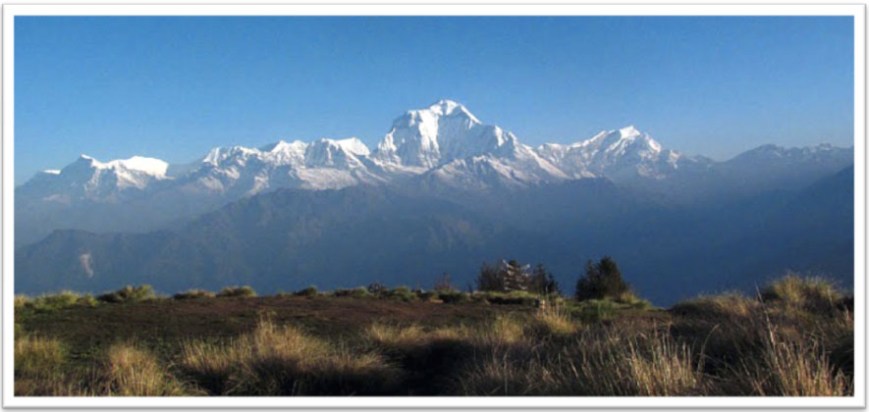
Rise early to climb up Poon Hill to watch a magnificent sunrise over the Himalaya. From west to east you can see Dhaulagiri, Tukuche, Dhampus Peak, Nilgiri, Annapurnas and Machapuchare – breathtaking! We then continue to Tadapani, trekking through open grassland and deep forests. On the way there are excellent views of Annapurna South and the Manaslu range.
Overnight Tea-House
Day 6 / Nov 15 – Trek TADAPANI to CHOMRONG (2,000m) 5 hrs
Today, we have a steep descent through rhododendron forest to the valley bottom, with fabulous mountain views. Later the path climbs steeply again before we arrive at the lively trekking hub of Chomrong.
Overnight Tea-House
Day 7 / Nov 16 – Trek CHOMRONG to DOBAN (2,500m) 6-7 hrs
Our trail descends on a stone staircase and crosses the Chomrong Khola before climbing through deep rhododendron and bamboo forests to Doban.
Overnight Tea-House
Day 8 / Nov 17 – Trek DOBAN to MBC, MACHAPUCHARE BASE CAMP (3,600m) 6-7 hrs
Our aim today is to pass through the gates of the sanctuary. We trek up the muddy surface of the Modi Khola, then along a rocky trail to Hinku cave. From here we climb towards the base camp of Machapuchare. There are stupendous views of the Hiunchuli, Annapurna I & III, Gangapurna and Machapuchare, the ‘fish tail’ mountain peak.
Overnight Tea-House
Day 9 / Nov 18 – Trek MBC to ABC, ANNAPURNA BASE CAMP (4,100m) 2-3 hrs
We continue our exploration of the sanctuary and ascend to the Annapurna Base Camp.
Overnight Tea-House
Day 10 / Nov 19 – Trek ABC to BAMBOO (2,500m) 6-7 hrs
Retracing our steps we return along the only route to Bamboo.
Overnight Tea-House
Day 11 / Nov 20 – Trek BAMBOO to JHINU (1,750m) 6 hrs
Descend to Chomrong, continue to Jhinu hot spring where we can enjoy a hot spring bath and soothe our aching muscles!
Overnight Tea-House
Day 12 / Nov 21 – Trek JHINU to DHAMPUS (1,600m) 7-8 hrs
Our last full day trekking, we follow the route to the village of Pothana and continue till Dhampus.
Overnight Tea-House
Day 13 / Nov 22 – Trek DHAMPUS to PHEDI (1130m) and drive to POKHARA (900m) 2 hrs trek and 45mins drive
A short morning trek to pick up our vehicle for the journey to Pokhara. Rest of the day at leisure in this beautiful lakeside city.
Overnight Hotel
Day 14 / Nov 23 – Fly POKHARA to KATHMANDU; 45mins
Early morning flight back to Kathmandu, spend the rest of the day at leisure or walking around Kathmandu which has interesting shops, cafes and restaurants, as well as colourful temples & shrines.
Overnight Hotel
Day 15 / Nov 24 – DEPART KATHMANDU
Transfer to International Airport. Trek Tour ends after lunch.
Important: This day-to-day schedule should be taken only as a general guide. Although we do a lot of research on our itineraries on a regular basis, it is not possible to guarantee that any of our trips will run exactly according to the proposed itinerary. A variety of factors, including adverse weather conditions and difficulties with transportation, can lead to enforced changes. The trip leader will make any changes that are necessary.
Land Cost : INR 68,000/- per person
Cost Includes: –
• Hotel 2-3 star Hotel in Kathmandu and Pokhara on twin sharing basis
• All transportation
• Aquaterra Adventures Trip leader being assisted by a Nepalese Trek leader
• Experienced Trekking “Chef”
• 1 porter between three trekkers
• Good clothing for porters and crew
• Food for porters & crew members
• Insurance for crew and porters
• All permits
• Twin sharing room on trek
• All meals on trek
• Domestic airfare.
Cost Excludes: –
• International Airfare
• International airport taxes
• Visas
• All optional additional tours or activities during free time
• Transportation outside of the tour program
• Travel insurance
• Tips
• Items of a personal nature like phone calls, alcohol, cigarettes, bottled beverages, laundry, souvenir etc.
• Costs arising out of unforeseen circumstances such as bad weather, landslides, road conditions and any other circumstances beyond our control.
What to expect
Accommodation:
The standard of Lodges along the Annapurna region is constantly improving. Some lodges may be rustic but have neat and clean rooms with shared bathroom while the newer lodges have been said to be even better than those in the Alps!
Whilst on trek there are 11 nights in lodges/tea houses. All accommodation is on a twin sharing basis (note that in some lodges only dormitory beds may be available). If you are travelling by yourself you will be paired up with another single client of the same sex. The ‘tea-houses’ are simple, friendly and atmospheric. Mostly these lodges have heated dining areas which are often ‘interestingly’ decorated.
Accommodation is basic in unheated rooms with wooden beds and foam mattress. You will need a sleeping bag. The lodges have shared washing and toilet facilities. Some lodges have solar powered showers (charged at $2 – $3 per shower) and battery charging facilities (also charged at a rate per hour). Staying at the lodges is a great way to meet fellow hikers and the locals.
Temperatures & climate:
In the Himalayas the weather is most stable in the post monsoon months of October –December offering the clearest skies and the best views of the high mountains. On the lower reaches of the trek , the maximum daytime temperature will be around 25°C / 77°F, with night-time lows around 10°C / 50°F. At our highest camps, the night-time temperature may fall as low as minus 10°C / plus 14°F. Although the weather is stable at this time one should remember that any mountain area generates its own weather system and some rain or light snowfall cannot be ruled out. Its best to be prepared for lower temperatures due to wind chill or the weather turning bad.
What to carry:
Keep it light – although what you carry with you is a very personal decision. Some of our guests love to travel as light as possible while others are only happy when they have countless bits of equipment for every possible eventuality, most of which will never be used. The list we send out at the time of booking covers all essentials that you must carry.
What you are expected to carry during the day on the trail is a day pack – to carry the things that you will need throughout the day, such as your camera, extra batteries, water bottle, sweets, rehydration powders, waterproofs, toilet paper, a fleece or a jumper.
A good pair of boots is very important: Wear thin cotton / nylon socks during the day, thick woollen ones would give you blisters – need to be worn only at the campsites to keep your feet warm. Few things will make you more miserable during the trek than blisters which are almost certain to occur if your boots are not broken in. If you are buying new boots buy them as soon as you can and wear them as much as you can before the trek.
Clothes:
While walking the body heats up and all we need to wear is a T-shirt & cargos/ trousers. However all our warm clothes will come into play in the mornings / evenings when we aren’t doing much physically. A good base layer which could be a thermal top (polypropylene), with a T-shirt on top will keep you warm and dry. Mid layers provide insulation so anything that is warm will do e.g. a medium thickness woollen jumper or a mid-weight fleece top, along with another lightweight fleece top will suffice. If you really feel the cold, substitute the thinner layer with a down jacket. The outer layer is the final layer between you and the elements and must be capable of keeping out the wind, rain, sleet and snow. Any good waterproof, windproof jacket would do the job. Leg wear in the form of thermal long johns are invaluable. A good sun hat is very essential. Sunglasses which offer 100% UV protection are necessary to combat strong sunlight and snow reflection.
Sleeping Bag:
A good quality sleeping bag ensures a good nights sleep after a long day outdoors. A minus 5 degree or lower sleeping bag is recommended for this trip. Do not compromise on your sleeping bag – err on the side of carrying a warmer bag, than carrying a light one which may give you many sleepless nights. We provide rubber mattresses to sleep on, if you have your personal thermarests or inflatable mattresses, please carry them along.
Medication & First Aid:
Carry any and all personal medication that you may need, and it’s an absolute must to let us know well in advance should you be suffering from any particular ailment.
First Aid accompanies each trip. All trip leaders have appropriate wilderness first-aid training and are experienced in dealing with a range of medical problems associated with adventure travel. It is advisable to have your own personal first aid kit consisting of a broad spectrum antibiotic, antiseptic cream, throat lozenges, diarrhoea treatment (Imodium), altitude (Diamox), painkillers, plasters and blister treatment, Insect repellent (DEET), and re-hydration salts (Electral, Dioralite etc). Glucose tablets and multi-vitamin tablets are also a good idea.
It’s also a good idea to have a roll of toilet paper accessible should you need to go.
How to carry baggage/ Baggage Allowance:
It’s best to carry your belongings in a large, tough duffle bag or a big rucksack. Pack similar things such as clothes, washing things, camping equipment etc. in separate sacks or polythene bags so they are easier to pull out when needed and add to the waterproofing in your bag. Your main duffle bag should be a tough one as it will be with the porter, not the best place to be for a fragile backpack. The packed weight of your duffle bag whilst on the mountain should be no more than 12kg (26.5 pounds). It is possible to leave extra clothes and other items not required on the trek at the hotel. Bring a second bag for this purpose. While trekking you will need to carry a small daypack large enough for your camera, water bottle, packed lunch, a warm layer and wind/rain jacket.
A day on a trek normally begins with tea at first light after which you are expected to get ready and start packing your bag. After a hot breakfast at the lodge dining room, we start the day’s walk. Normally after walking 3-4 hrs we arrive at our lunch spot where we have lunch in one of the tea-houses. Lunch break is normally about an hour or a little more. We continue walking after lunch and aim to reach our overnight stop by 3 or 4 p.m. This leaves plenty of time for exploring the place and for catching up on your diary or for reading. Dinner is served in the lodge dining room and is a three course meal. This is a great time of day for relaxing, meeting fellow trekkers and discussing the events of the trek etc.
Our Crew:
Our group would be led by a highly experienced ATA mountain guide with the help of first-rate local guide who would have considerable experience of leading treks to Annapurna Sanctuary. The support crew will consist of cooking staff (along with porters), who would prepare the days meals for the days that we are on the trek.
Food:
On the trek, the food is a mixture of local and European, all purchased in Nepal and cooked for us by highly trained trek cooks. Menus vary from Indian fare to Chinese, pasta, cold cuts, sandwiches, eggs etc. The emphasis is on a high carbohydrate and largely vegetarian diet, which we have found to be easily digestible especially at high altitude. This is a fully inclusive package and all meals are included in the trip price. You might want to carry your favourite snack or some power bars with you for the long trekking days. We will provide you safe drinking water throughout the trek – it will be boiled with a dash of iodine.
The entire crew moves together in a totally self-contained manner like a tightly knit unit.
Altitude considerations:
Travel to any part of the Indian Himalayas deserves a little more respect than many other mountain ranges because most of the regions lie in high altitudes 2500 meters (8000 ft).
This is not something that you should worry about. The human body is quite capable of adapting to a very wide range of barometric pressures and there is plenty of oxygen even at the highest point of our trips. However, this process of adaptation or acclimatisation does take time and the most important rule is to gain height slowly.
We do not take heart or lung patients, or pregnant mothers on such trips.
General Information
Language:
The national language of Nepal is Nepali, which is quite similar in structure to Hindi. You will find that a lot of people speak basic English, so you will not have any problems buying souvenirs or ordering in restaurants etc.
Visa requirements:
A valid passport is required with 6 months remaining validity at the time of travelling. All nationalities except Indians need a visa for entry into Nepal for which you will need to contact the Nepalese Embassy in your home country. Visas are also available on arrival in Kathmandu
Joining arrangements and transfers:
You MUST provide our office full details of your flights, so that we can arrange your airport transfers in Kathmandu. Hotel contact details and an emergency number will be provided with your joining instructions prior to departure.
Spending money:
Additional amounts should be carried to cover miscellaneous expenses, including tips. There will be opportunities to buy snacks, soft drinks and beer on the trek. Souvenirs can be bought in a number of places, some of which will accept credit cards. If you are intending to buy expensive items, you should budget accordingly. Your travel money should be carried in the form of cash. Sterling, Euros, US dollars, Indian Rupees are accepted in Nepal. It is also possible to withdraw money from the ATMs in Kathmandu.
Responsible Travel:
We believe that along with the privilege of travelling in the wilderness comes a serious responsibility, the responsibility to protect and contribute to its ecology, cultures and its tremendous beauty. The “Leave No Trace” philosophy is followed to the letter and we work to minimize the environmental impact of our trips. We are scrupulous in our camping, cooking and sanitation practices; we limit the number of trekkers we allow to join us on our trips and the number of trips we lead in a given area.
Activity Level
Our expedition trips are designed for energetic and flexible people who have the spirit of adventure and a positive attitude. Previous experience in the outdoors and camping helps, though is not a must. These trips are participatory in nature, and everyone is expected to pitch in, set up and break down their own tent, clean their own dishes. Look up our trip grading before you sign up: Moderate
The Next Step
Ready to go? Email me at pavanemann@gmail.com to book your place and I will guide you through the booking process.
Why book a trip with me?
Because I am one of the pioneers of adventure sports in India and have the experience to direct you to the best in the field. Any trips I promote are thoroughly researched and run by outfits that include people that have worked with me, been trained by me, or have been peers that I myself have travelled with. I have a lot to live up to and I ensure that you are indeed looked after by the best in whichever area you choose.
References: Should you wish to contact any of our past guests for a trip reference, write to us.
Services provided
In remote regions, we often use local suppliers who provide services that may include vehicles for transportation, equipment, logistical support, hotels, guest houses etc. We do not own or operate these independent services or suppliers. We work with them as they share our commitment to service and quality.


 Before you Book, Read This !!
 Journeys & Discoveries